
Riddles the Soul Understands Before the Mind Does.
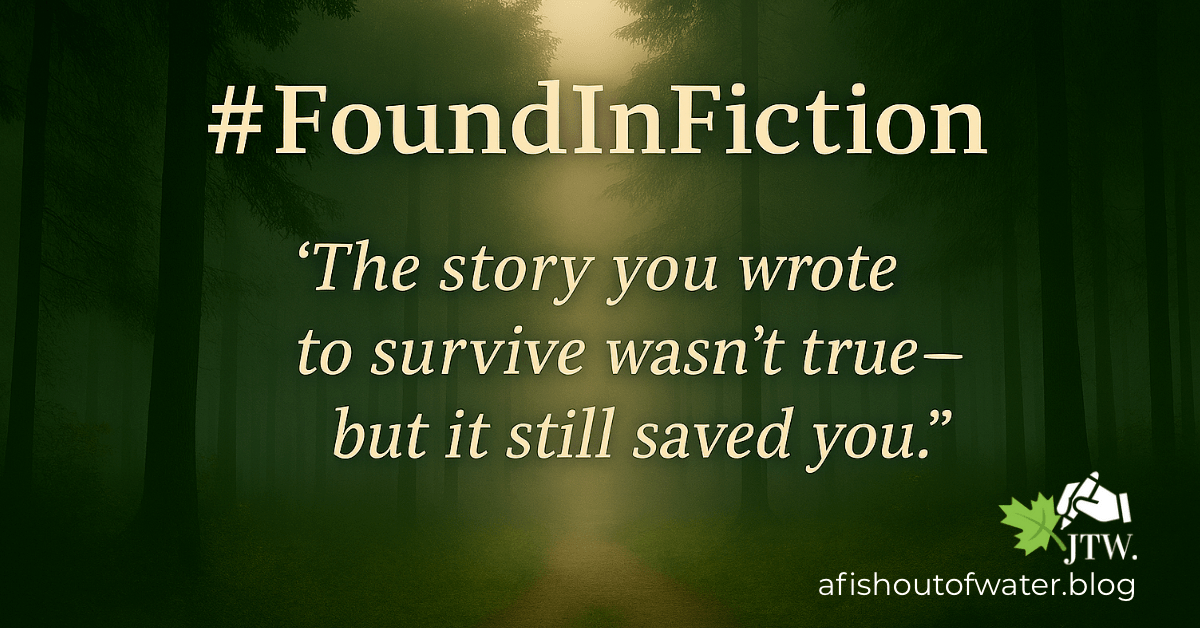
“The story you wrote to survive wasn’t true— but it still saved you.”
You survived with a story. Maybe it said you were fine. Maybe it said you were in control. Maybe it said you deserved the silence, the distance, the pressure, the pain.
It wasn’t true. But it worked.
It held you upright. It helped you sleep. It let you function in rooms that would’ve devoured you otherwise.
This is what we rarely say out loud: sometimes our earliest theology, our fiercest inner vows, our mental escape routes… aren’t meant to be accurate. They’re meant to be bearable.
This is especially true in the realm of faith. For many of us—including myself—our earliest experiences of God were filtered through frameworks like traditional evangelicalism, conservative doctrine, or prosperity theology. We were handed interpretations, certainties, and rituals. And we believed sincerely. We experienced real transformation. Sometimes, miracles.
That doesn’t make those frameworks universally true—but it does mean something powerful happened within them. And that’s the nuance: God met us there. In our language. In our categories. In our fiction. Because love doesn’t wait for perfect theology to make contact.
But here’s the trap: we often mistake divine concession for doctrinal confirmation. We think, “Because it worked, it must be entirely right.” But maybe it worked because God is gracious—not because the map was flawless.
The fiction wasn’t a failure. > It was a flotation device.
And here’s the wonder: God doesn’t despise those stories. He joins us inside them. Not to shame us. Not to demand instant truth. But to co-author the next chapter—one that begins with mercy, not correction.
Because grace doesn’t wait for you to “get it right.” It meets you in the coping mechanism, the half-truth, the protection plan, and says, “This kept you alive. And now, when you’re ready… let’s rewrite it together.”
This is what divine accommodation looks like. And what spiritual maturity can look like too: learning to offer that same gentleness to others. Not rushing their undoing. Not mocking their mask. Not yanking the pen from their hands mid-sentence. But trusting that even if the story isn’t true— if it saved them, it’s worth honoring before it’s rewritten.
 afishoutofwater.blog
Leave a comment